Emily Pettigrew: Painting in the Catskills 2021-2025 showcases vignettes of Upstate New York. On view through August 24 at Fenimore Art Museum in Cooperstown, New York, the exhibition includes 13 paintings Pettigrew created since trading New York City for the countryside.
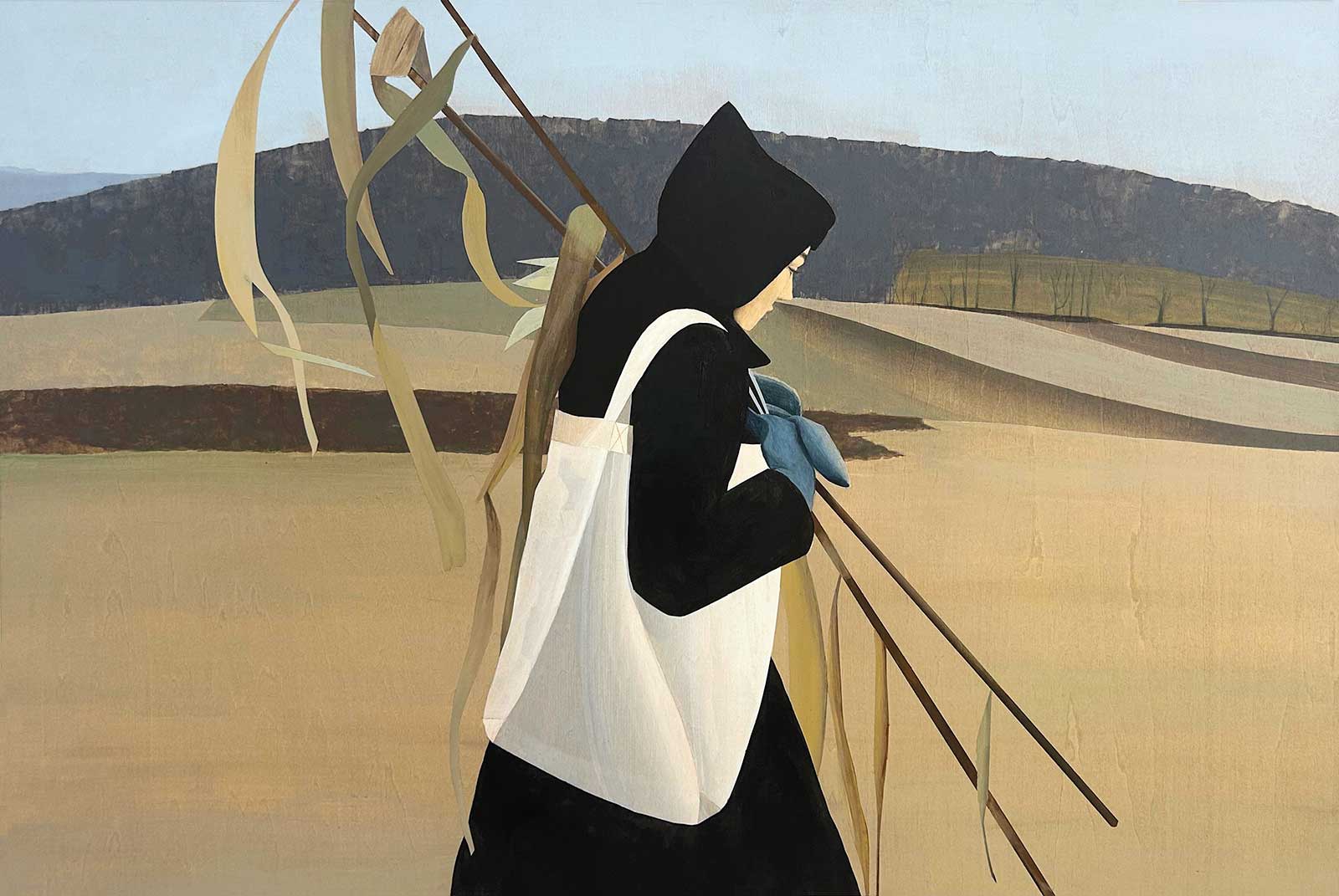
Reaper, acrylic and graphite on wood, 24 x 36"
“I felt very stifled in the city, and I wanted to get back to something where I was in connection with the land,” says Pettigrew, who, after studying at Pratt Institute, was longing for the magic of her childhood in coastal Maine. The Catskills share some of that sensibility, the artist explains. It’s a place—like many of Pettigrew’s paintings—steeped in history yet unmoored by time.
Fenimore Farm, a property once owned by novelist James Fenimore Cooper, was one of those places for Pettigrew. A painting inspired by her visit to the living history museum got the attention of staffers at their partner institution, Fenimore Art Museum. “I feel like there’s some kind of strange, sort of magical and uncomfortable feeling that happens for me when I’m in a place or having an experience like that,” she says.
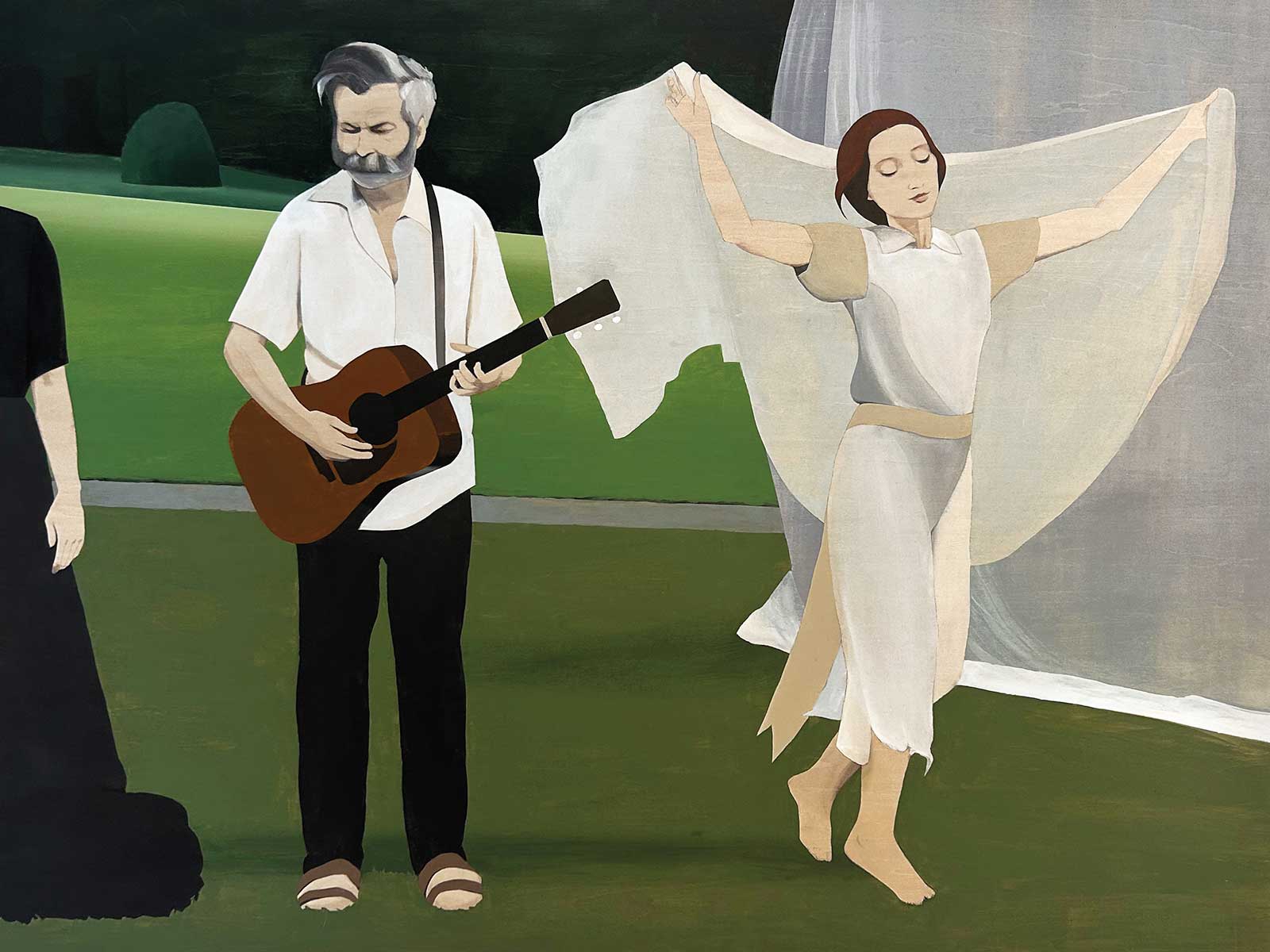
Ballad Troupe, acrylic and graphite on wood, 30 x 40"
Known for its focus on American art, Fenimore Art Museum collects folk and Indigenous art alongside recent acquisitions by Mary Cassatt and Georgia O’Keeffe. “Emily’s work is a great fit for us on a lot of levels,” says exhibition specialist Chris Rossi. “We’ve got this wonderful grouping of women artists up on our second floor [who are] drawing from everyday life,” Rossi continues, citing a concurrent exhibition of Cassatt and Berthe Morisot.
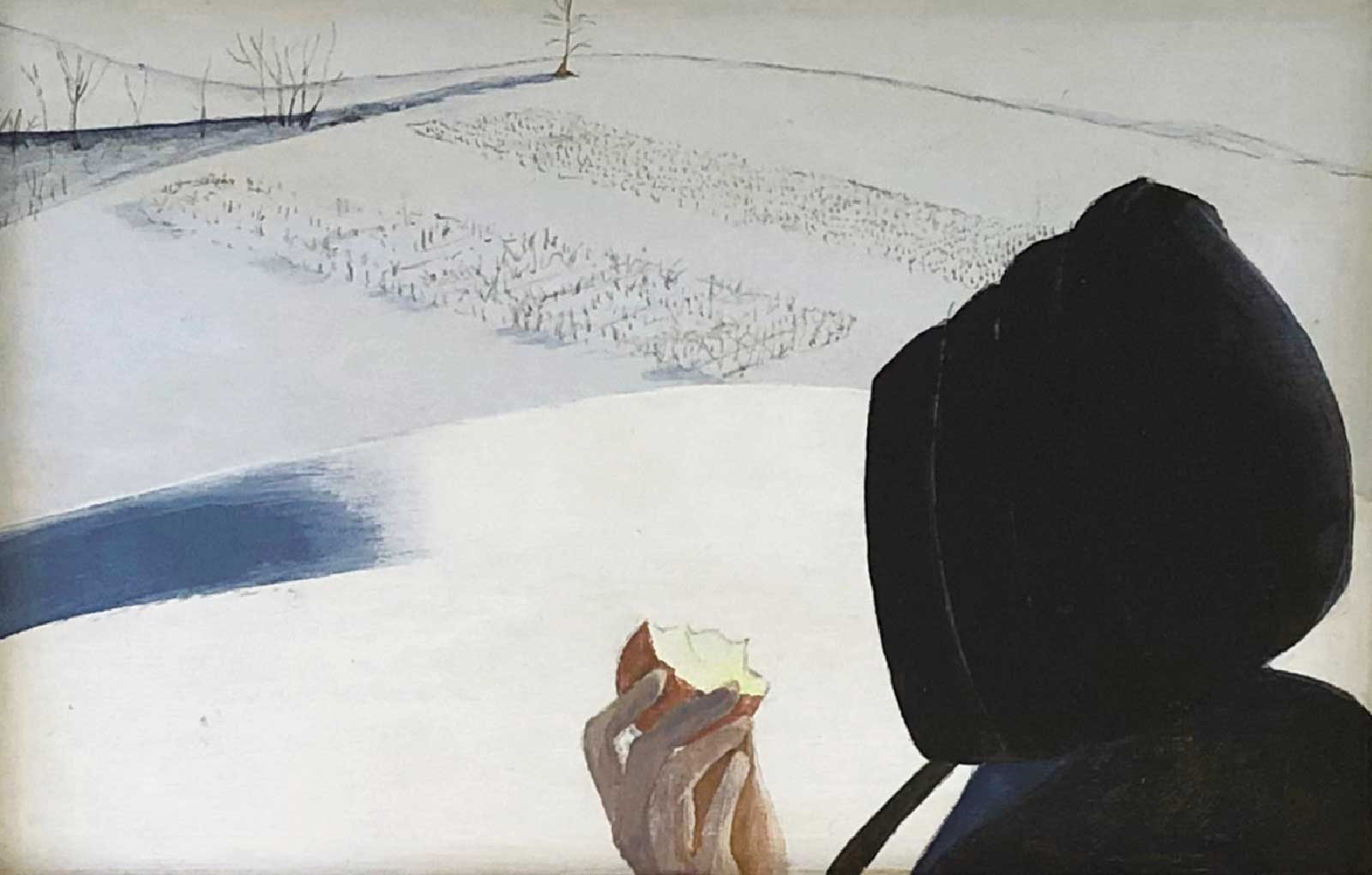
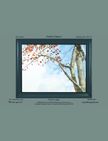
From the Top of Vroman’s Nose, acrylic and graphite on wood, 9½ x 7¼"
“The simplicity of line, the cleanness of how some of the paintings, and some of the needleworks and watercolors, are executed in the folk art collection relate, I think, really well to Emily’s work,” says Rossi. Often employing straightforward fields of color, economically painted to reveal a grainy wood panel below, Pettigrew’s paintings are ‘deceptively simple,’ but there’s a lot going on.”
Pettigrew shares, “Growing up in Maine, I was really steeped in that kind of aesthetic tradition of puritanical architecture and things being quite stark, no excessive ornament…I love the Shakers and the objects that they made.”
“Some of her work actually reminds me of Andrew Wyeth’s work, which we have had on display here,” says Rossi, noting the similarities between Maine, where Wyeth also painted, and Upstate New York. “You know the sparseness of the landscape at times in the winter, the harshness of the landscape, you could see that in Emily’s work.”
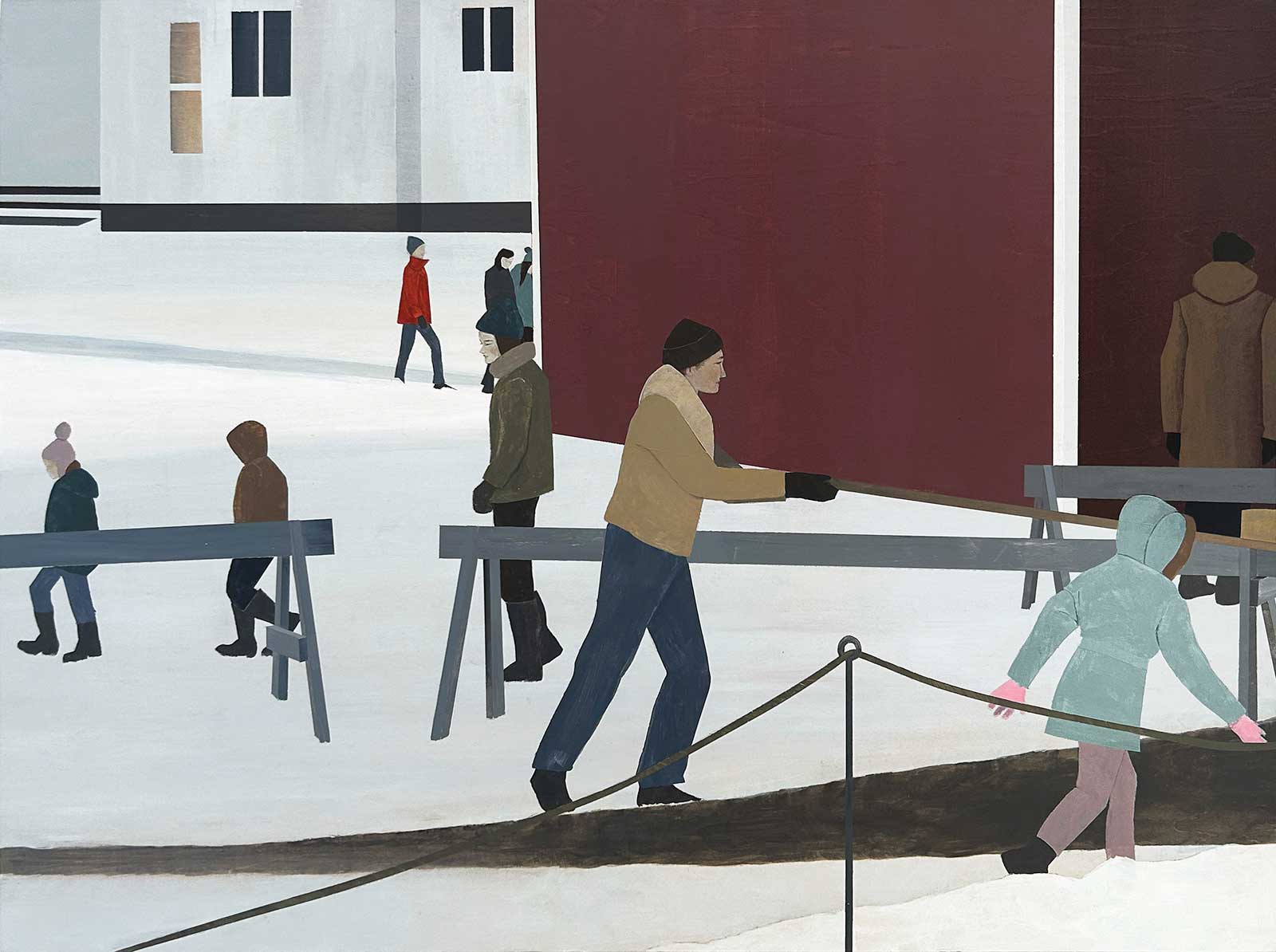
Ice Harvest, acrylic and graphite on wood, 18 x 24"
Christina’s World by Andrew Wyeth was Pettigrew’s favorite painting as a child. She liked the idea of a pretty girl laying in a field, then her mother explained that Christina was disabled and had to crawl. “That’s not what I wanted the painting to be,” remembers Pettigrew, who experienced her own mobility-limiting condition years later. “There’s something resonant to me in my own trajectory,” she says.
Perhaps a nod to Wyeth’s Groundhog Day, Pettigrew’s painting of a wash basin and pitcher, A Gauzy Air in the Bedroom, shares its reverence for a stolen moment in a domestic scene. Her painting From the Top of Vroman’s Noseechoes the benign, but maybe-something’s-amiss-here undercurrent also found in Reaper.
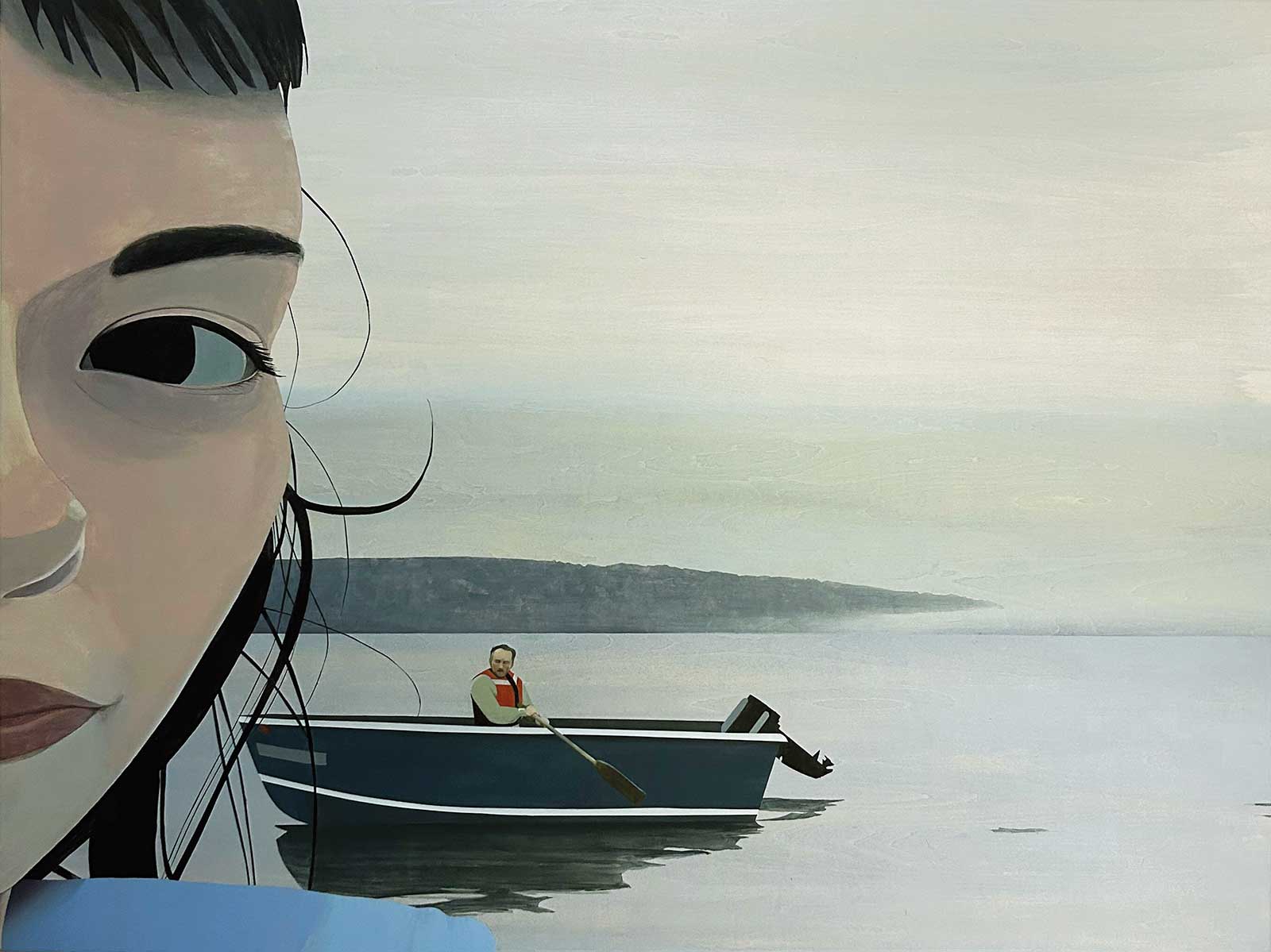
Back from the Mainland, acylic and graphite on wood, 36 x 48"
At first quaint or pastoral, many of Pettigrew’s paintings are subtly awry or uneasy. A girl harmlessly harvesting corn could also be read as sinister, her black cloak and scythe-like stalks gesturing toward the moment of death. Meanwhile, shadowy works with cats and doorways and oddly cropped figures cast doubt on the purity of an agrarian life.
“I really like folk horror as a cinema genre,” says Pettigrew, “where this kind of academic or sophisticated person goes into a small town and then encounters these folk traditions that are really aesthetic and beautiful…but then end up being very disturbing and scary.” She’s interested in Pagan rituals that parallel seasonal changes and hasn’t forgotten the fact that colonial America was full of violence, gender inequality, witch trials and slavery.
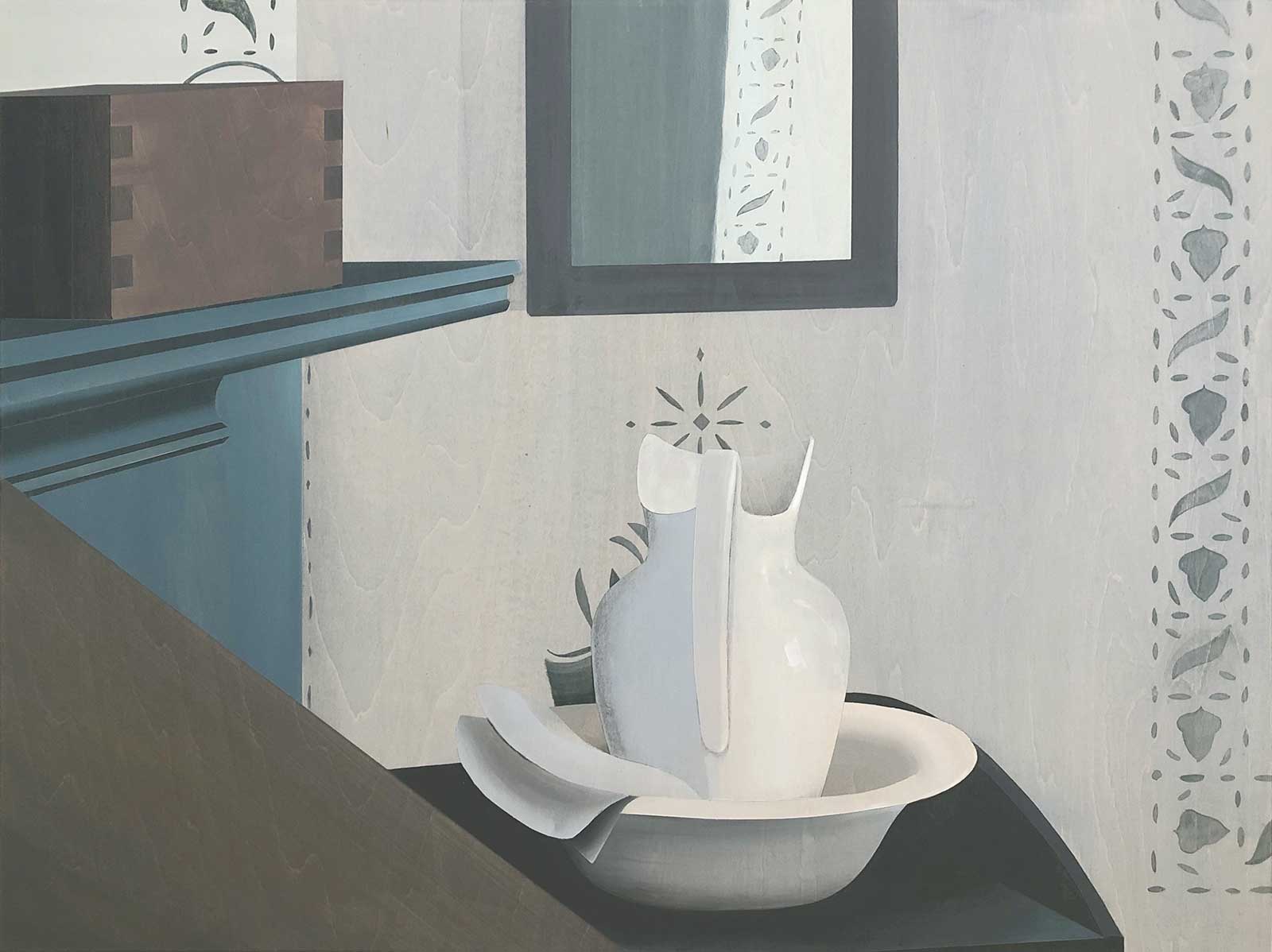
A Gauzy Air in the Bedroom, acrylic and graphite on wood, 18 x 24"
“There is definitely this feeling of darkness and creepiness when you go back into times like that,” says Pettigrew, noting traditional art forms like folk ballads that marry beautiful expression with macabre subject matter. “I like that contrast,” she says.
“Her paintings are really fascinating because they have some of that magical realism in them. You feel like, yes, you’re in a scene that’s somewhat familiar, but maybe something’s just a little off kilter, says Rossi. “Something’s happening just outside of the corner of your eye that you can’t quite catch.”
For Pettigrew, who often serves as her own model, the work is more about creating an archetypal or a mythic quality rather than being about her as an individual—while personal, it’s a universal story instead of a specific moment in time. Painting the Catskills, it appears, has been an exercise in walking that line. —
Emily Pettigrew: Painting in the Catskills 2021-2025
Through August 24, 2025
Fenimore Art Museum
5798 State Highway 80
Cooperstown, NY 13326
(607)547-1400
www.fenimoreartmuseum.org
Powered by Froala Editor